FN M249 Trigger Mechanism Replacement: The Precision Upgrade Your M249 or M249S Deserves
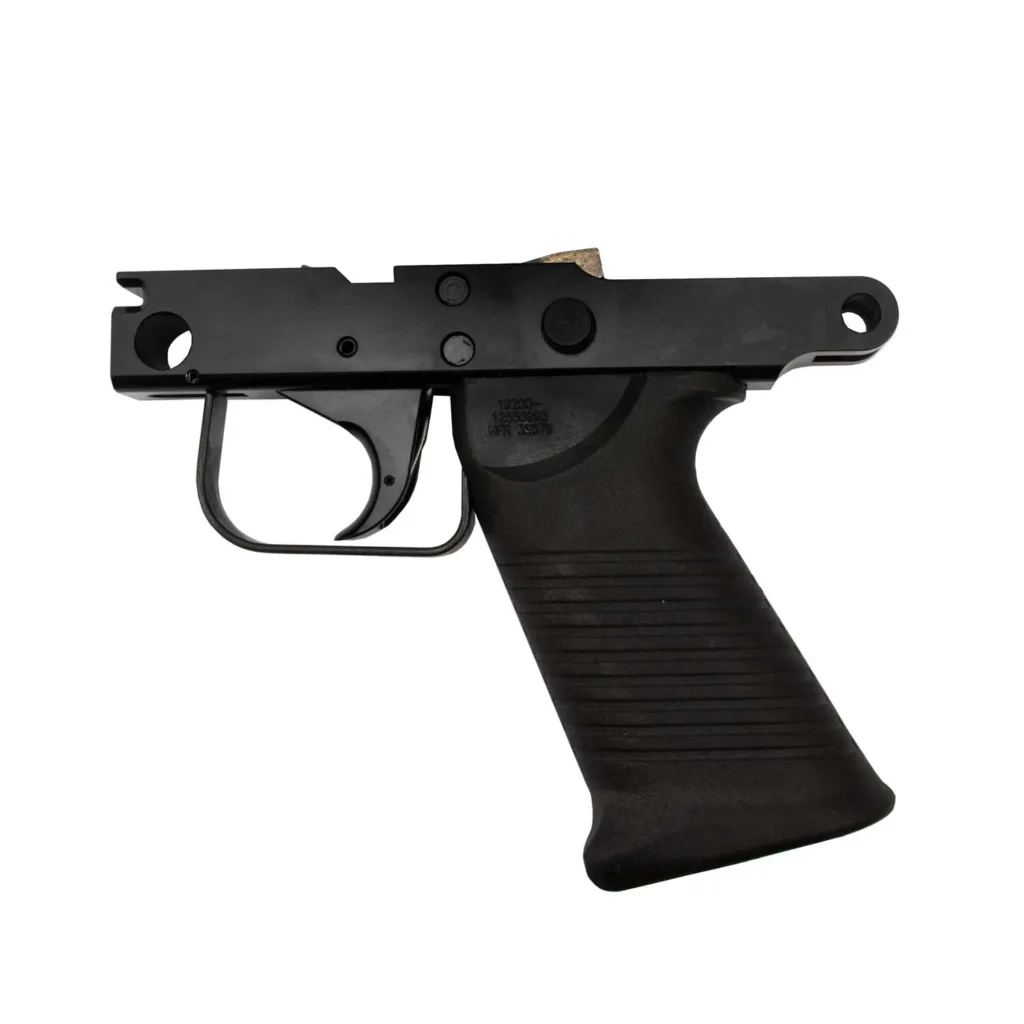
Whether you’re running the military-pedigree FN M249 or the civilian-legal FN M249S, one truth holds for serious shooters: the factory trigger group is functional, but it’s rarely exceptional. For those who demand repeatable precision, enhanced reset consistency, and a refined pull weight that doesn’t fight you during sustained fire or deliberate semi-auto work, a quality trigger mechanism replacement isn’t just an upgrade — it’s a fundamentally different shooting experience.FN M249 Trigger Mechanism for FN M249, FN M249S
This guide covers everything you need to know about trigger mechanism replacement for the FN M249 and M249S platform: what the upgrade changes, why it matters, how to approach the installation, and what to look for in a precision-grade component.FN MK48 Trigger for Mod 0, Mod 1, Mod 2
Understanding the FN M249 Trigger Group
The FN M249 is a belt-fed light machine gun chambered in 5.56×45mm NATO, designed for sustained automatic fire in military applications. The M249S is the civilian-legal semi-automatic variant, making it compliant for commercial sale in the United States. Both share nearly identical trigger group architecture.
The standard trigger group consists of:
•Trigger – the primary interface component, initiating sear release
•Sear – engages and releases the bolt carrier group
•Disconnector – resets the sear for subsequent semi-auto fire (critical on the M249S)
•Safety lever – blocks trigger movement when engaged
•Trigger spring – provides return force and influences pull weight
•Trigger pin and housing – the retention and structural framework
On the M249S in particular, the disconnector’s precision matters enormously. Any slop, inconsistency, or over-travel in the trigger group translates directly to degraded accuracy during deliberate shooting.
Why Upgrade? The Case for a Precision Trigger Mechanism
1. Pull Weight Consistency
Factory M249S trigger groups are often spec’d on the heavier end — sometimes 8 to 12 pounds of pull weight — to meet broad military and commercial tolerances. A precision replacement component targets a specific, consistent pull weight, reducing variability between trigger pulls. This is not about going as light as possible; it’s about getting the same pull every single time.
2. Reduced Pre-Travel and Over-Travel
Standard trigger groups can exhibit noticeable pre-travel (slack before sear engagement) and over-travel (movement after break). A precision machined replacement tightens these tolerances, giving the shooter a cleaner break point and a more defined reset.
3. Sharper Reset
Reset — the distance the trigger must travel forward before it re-engages the sear — is one of the most critical factors for accurate follow-up shots. A well-engineered replacement trigger mechanism shortens and sharpens the reset, allowing the shooter to maintain a higher degree of control without breaking their sight picture.
4. Durability and Materials
Military surplus or factory-spec components are built for longevity under combat conditions, not necessarily for tight tolerances. Aftermarket precision components often use tool steel, Carpenter 158 steel, or S7 tool steel with enhanced heat treatments, providing both tighter manufacturing tolerances and extended service life under high round counts.
5. The M249S Semi-Auto Advantage
The M249S’s civilian configuration places all responsibility for accurate fire on the trigger group. There’s no “burst” mode to lean on. Every round is a deliberate pull. An upgraded trigger mechanism transforms the M249S from a novelty range piece into a capable precision platform — useful for competitive shooting, long-range belt-fed challenges, or simply maximizing the investment you’ve made in this rare and impressive firearm.
Key Specifications to Look For
When evaluating a trigger mechanism replacement for the FN M249 or M249S, prioritize these specifications:
|Feature |What to Look For |
|——————|——————————————————————|
|**Pull Weight** |Consistent 5–7 lb range (semi-auto) or as-specified |
|**Pre-Travel** |Minimal — measured in fractions of a millimeter |
This is a critical distinction. The FN M249 (military contract version) and the FN M249S (civilian semi-auto) share the same external chassis, but their trigger group components are not interchangeable in all cases — and swapping military full-auto components into a civilian M249S is a federal felony under the National Firearms Act.
Always ensure that any trigger mechanism replacement is:
•Specifically designed and labeled for the M249S (civilian semi-auto)
•NFA-compliant — no full-auto sear, auto sear trip, or related fire control components
•Sourced from a reputable manufacturer with clear compliance documentation
If you own a registered pre-1986 M249 transferable machine gun, consult with a licensed NFA dealer or gunsmith before replacing any fire control components.
Installation Overview
Trigger mechanism replacement on the M249/M249S is more involved than a standard AR-15 trigger swap, but remains within the capability of a mechanically proficient shooter with the right tools and reference material.
Tools Required:
•Punch set (including roll pin punches)
•Polymer or brass mallet
•Bench block or receiver support jig
•Needle-nose pliers
•Torque-limiting screwdriver (if applicable)
•Clean work surface with parts tray
General Process:
1.Clear and safe the firearm. Visually and physically verify the chamber and feed tray are empty. Remove the belt or magazine if applicable.
2.Field strip to access the trigger group. Open the top cover, remove the bolt carrier assembly, and separate the upper receiver from the lower.
3.Remove the existing trigger group. Drive out the trigger pin(s) and carefully extract the sear, trigger, disconnector, and springs, noting orientation and assembly order.
4.Install the replacement mechanism. Follow the manufacturer’s instructions precisely. Spring seating and component orientation are critical on the M249 platform.
5.Reassemble and function check. Cycle the action, check trigger pull, verify reset function, and confirm safety engagement and disengagement work correctly before live fire.
Always consult the FN M249S owner’s manual and the replacement component’s included instructions. When in doubt, have the installation performed by a qualified gunsmith.
What “Precision Upgrade Component” Really Means
The phrase gets used loosely in the firearms market. In the context of an M249 / M249S trigger mechanism, a genuine precision upgrade component should demonstrate:
•CNC machining to tighter-than-mil-spec tolerances — typically ±0.001” or better on sear engagement surfaces
•Documented pull weight testing — not just a claimed average, but a tested range from that specific production batch
•Polished sear and disconnector engagement surfaces — reducing friction without compromising geometry
•Quality control documentation — serialization, batch testing, or individual inspection records
•Manufacturer support — a company that stands behind the component with warranty and technical assistance
The M249/M249S is a high-investment platform. The trigger group is the most human-interactive system in the firearm. Cutting corners here undermines the entire platform’s potential.
Practical Impact: Range Performance
Shooters who have made the switch from factory to precision trigger mechanisms on the M249S consistently report:
•Tighter group sizes at 100–300 yards during deliberate semi-auto fire
•Reduced shooter fatigue during extended range sessions due to lower pull weight
•Improved split times in competitive belt-fed shooting formats
•Greater confidence in the firearm’s mechanical consistency
The M249S weighs over 17 pounds empty and handles like the crew-served weapon it was designed to be. A refined trigger doesn’t change the physics — but it does change how well you can apply your marksmanship fundamentals to the platform.
Legal Considerations
•All trigger upgrades for the M249S must maintain semi-automatic-only fire control geometry.
•Any component that enables, facilitates, or is intended to enable automatic fire is regulated under the National Firearms Act (NFA) and the Hughes Amendment (FOPA 1986).
•Purchase trigger mechanism replacements only from licensed manufacturers who clearly specify civilian M249S compliance.
•Check your state and local laws — some jurisdictions have additional restrictions on magazine-fed or belt-fed semi-automatic firearms and their components.
Conclusion
The FN M249 and M249S are remarkable firearms — overbuilt, reliable, and capable of far more precision than their military utility role demands. A quality trigger mechanism replacement is the most direct path to unlocking that precision. Whether you’re a competitive shooter, a serious collector, or simply someone who wants to shoot the M249S as well as it’s capable of being shot, investing in a purpose-built precision trigger group component delivers measurable, repeatable results.
Choose components verified for M249S compatibility, understand your legal obligations, and don’t settle for factory tolerances when purpose-built precision is available.
Always follow all applicable federal, state, and local laws when purchasing, installing, or modifying firearm components. When in doubt, consult a licensed gunsmith or FFL dealer.